
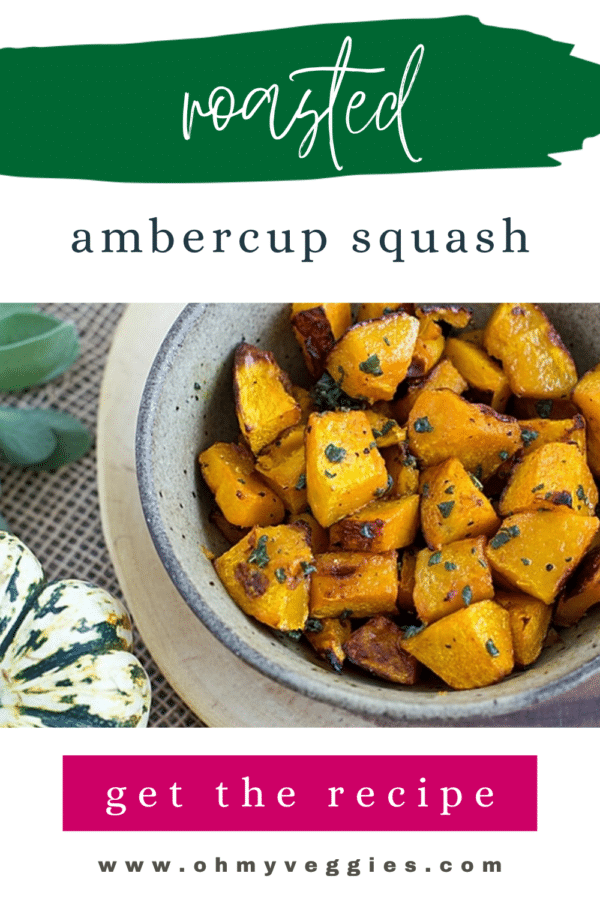
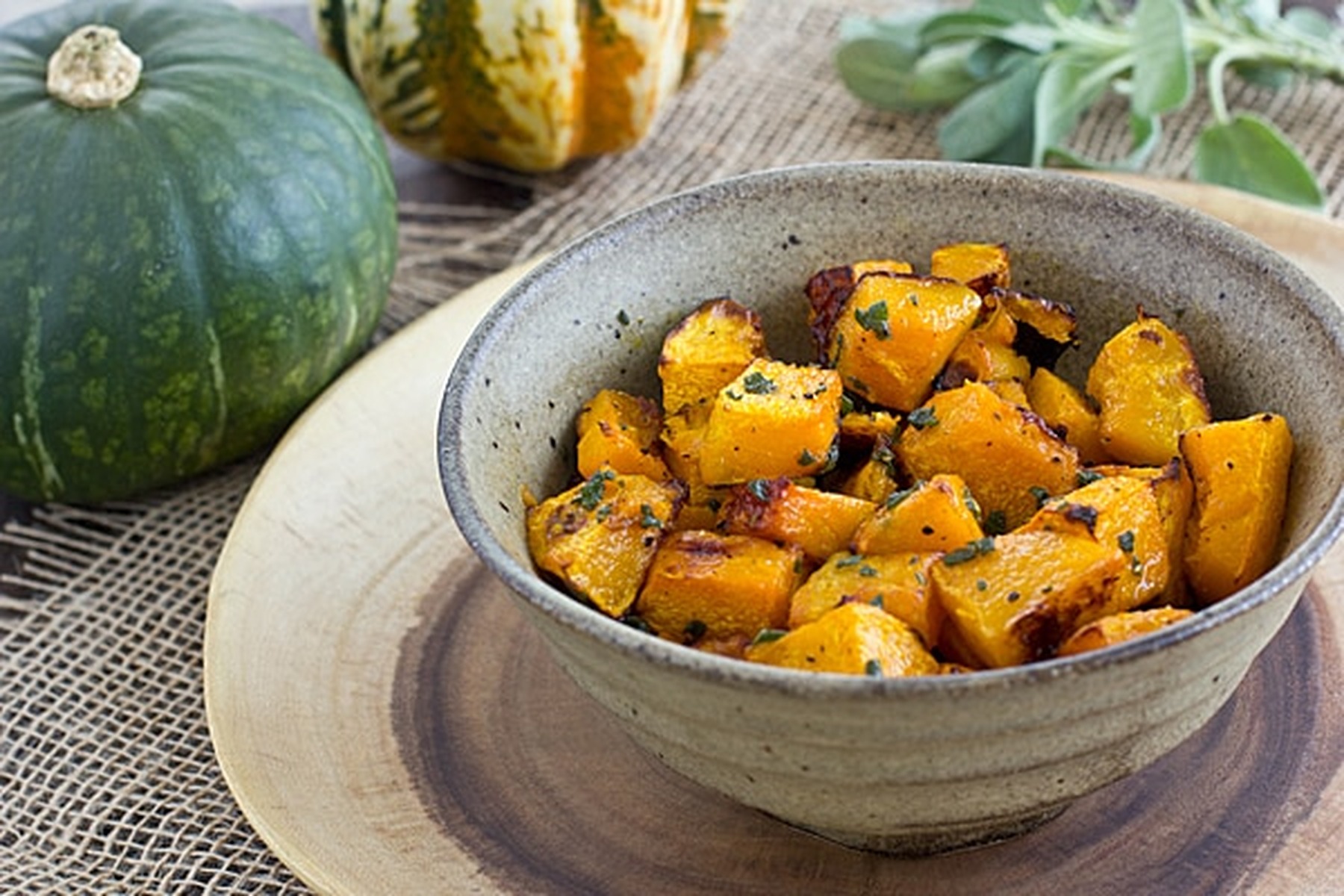
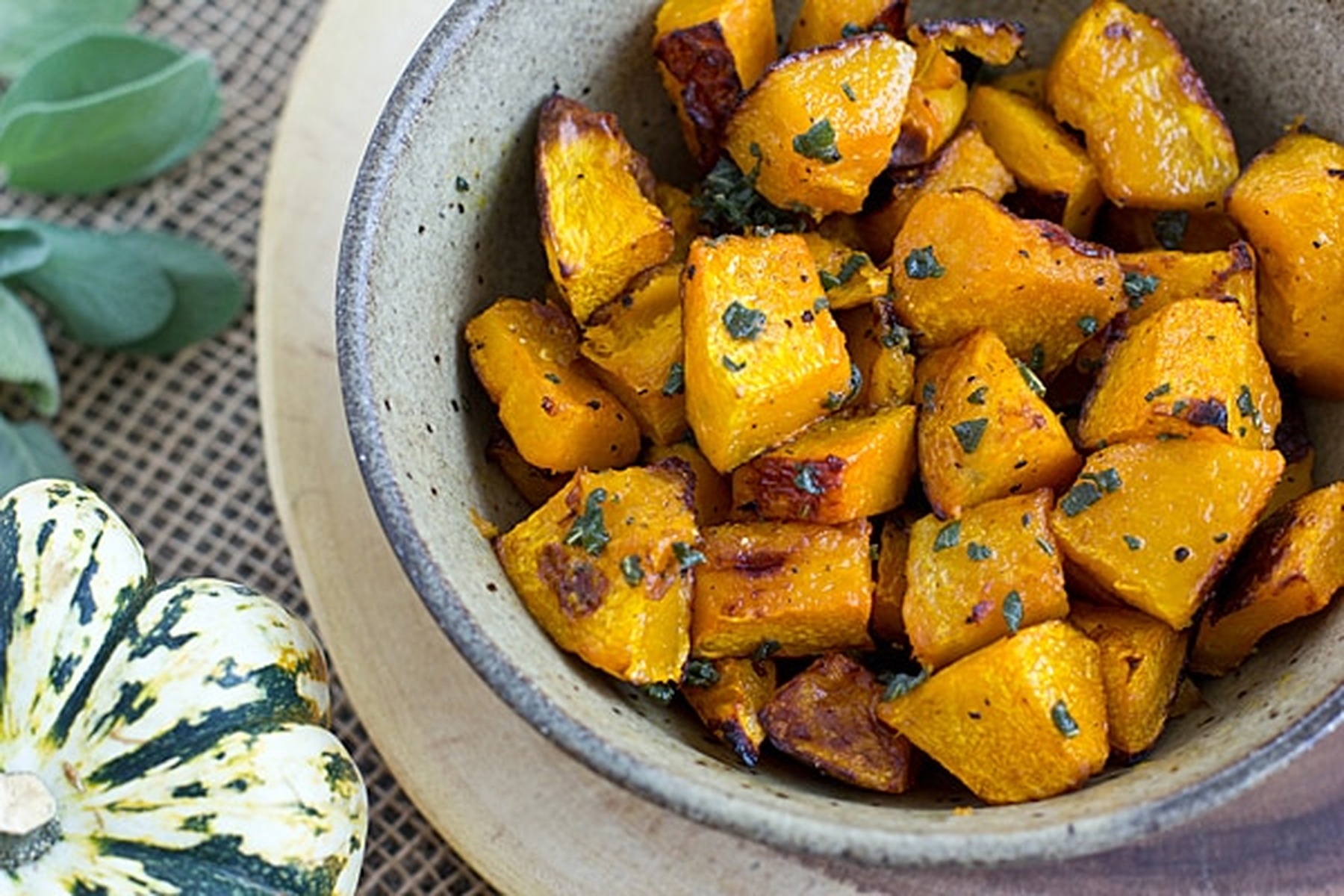
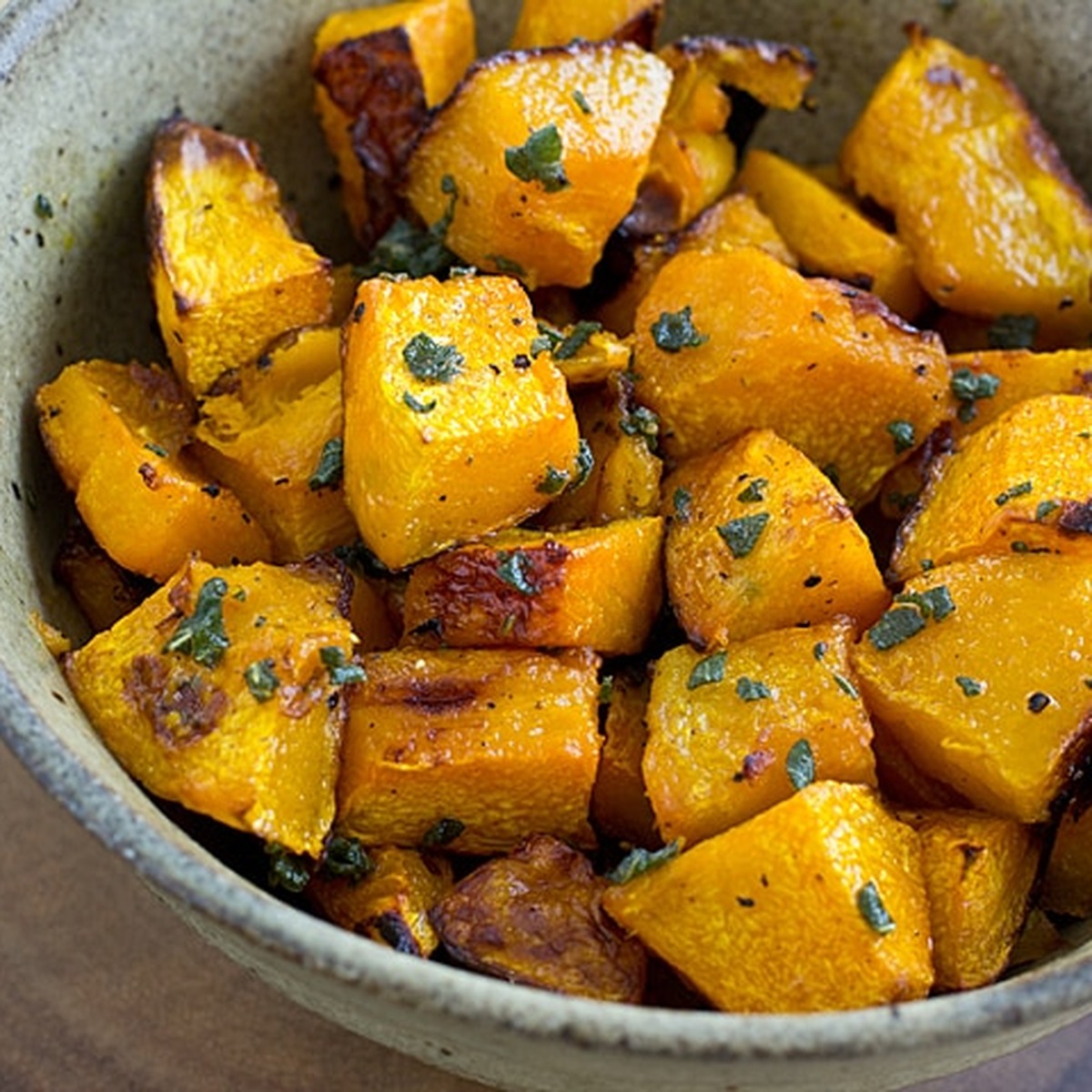
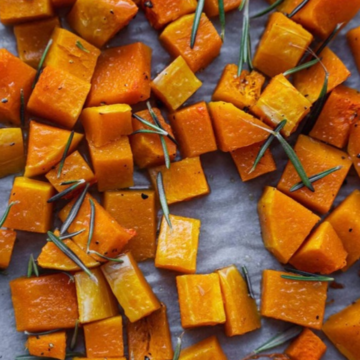
This roasted ambercup squash gets tossed in nutty brown butter and fresh sage for a cozy fall side dish that tastes like it took far more effort than it did. The squash roasts until the edges caramelize and the centers turn creamy and sweet, and five simple ingredients do all the work.
Key Ingredients & Substitutions
- Ambercup squash. Ambercup is a buttercup-type winter squash with a squat, dark green shell and deep orange flesh that is dense, sweet, and a little drier than butternut, which is exactly why it browns so well in the oven. The skin softens as it roasts, so peeling is optional. If you can't find ambercup, buttercup, kabocha, red kuri, butternut, or acorn squash all work the same way. Our Guide to Winter Squash walks through how each variety looks and tastes.
- Olive oil. A light coating helps the squash caramelize instead of steam. An olive oil mister gives you an even, thin layer with very little oil, but cooking spray or a tablespoon of oil tossed with the cubes by hand works just as well.
- Unsalted butter. Unsalted butter lets you control the seasoning and shows you clearly when the milk solids start to toast. For a vegan version, use a good vegan butter (it won't brown as deeply, so watch for a nutty smell rather than color) or warm the sage in olive oil instead.
- Fresh sage. Sage and winter squash are a classic pairing for a reason. The leaves crisp slightly in the hot butter and perfume the whole dish. Fresh thyme or rosemary are good stand-ins, but skip dried sage here, since it turns dusty rather than crisp.
- Salt and pepper. Season the squash before it goes into the oven and taste again after tossing it with the brown butter. A pinch of flaky salt at the end is a nice touch.
Helpful Tips
Cut the squash safely. Winter squash is hard, so start by slicing a thin piece off one side to give it a flat base that won't roll. Halve it through the stem end with a heavy chef's knife, scoop out the seeds, then cut it into wedges before cubing. If it's too tough to cut, microwave the whole squash for two to three minutes to soften the shell slightly.
Keep the cubes the same size. One-inch pieces cook evenly and give you a good ratio of caramelized edges to tender middle. Smaller pieces can scorch before the larger ones are done.
Give it room on the pan. Spread the squash in a single layer on a rimmed baking sheet with a little space between pieces. Crowded squash steams and stays pale, so use two pans if needed.
Brown the butter in a light-colored pan. A stainless steel skillet makes it easy to see the milk solids turn from golden to toasty brown. Swirl or whisk the butter constantly, and pull it off the heat as soon as it smells nutty, because it can go from brown to burnt in seconds.
Toss while everything is hot. Add the brown butter to the squash right out of the oven so the warm pieces soak it up. Toss gently with a spatula so the tender cubes hold their shape.

Variations
- Maple brown butter. Stir a teaspoon of maple syrup into the brown butter just after it comes off the heat for a sweeter, glazed finish.
- Parmesan and walnuts. Top the finished squash with shaved Parmesan and a handful of toasted walnuts or pecans for crunch.
- A little heat. Add a pinch of red pepper flakes or a dusting of smoked paprika to the squash before roasting.
- Garlic and thyme. Swap the sage for fresh thyme and add a sliced garlic clove to the butter for the last minute of browning.
- Tart and tangy. Finish with a squeeze of lemon juice or a drizzle of balsamic reduction to balance the richness.
- Grain bowl. Spoon the squash over farro or quinoa with baby greens and a sprinkle of dried cranberries for a simple lunch.
Serving Ideas
This squash is an easy side for a weeknight dinner or a holiday table. It pairs nicely with hearty vegetarian mains like our Baby Bella & Kale Casserole or Kale-Stuffed Portabella Mushrooms, and it holds its own next to mashed potatoes, stuffing, and cranberry sauce at Thanksgiving.
For a lighter meal, pile it onto a bed of arugula with goat cheese and toasted pepitas, or fold it into warm pasta with extra sage and a spoonful of the brown butter. Leftovers are great tucked into quesadillas or tossed into a grain salad the next day.
Storing & Freezing
Store leftover roasted squash in an airtight container in the refrigerator for up to 4 days. Reheat it in a 400°F oven or a hot skillet for 8 to 10 minutes to bring back some of the crispy edges; the microwave works too, but the squash will be softer.
To freeze, spread the cooled squash on a lined baking sheet until firm, then transfer it to a freezer bag for up to 3 months. The texture turns softer after thawing, so frozen squash is best reheated from frozen in the oven or used in soups, pasta, or mashed squash rather than served as a crisp side.
More Fall Squash Recipes
Ambercup squash is interchangeable with most dense, orange-fleshed winter squash, so it's a great stand-in for butternut, acorn, kabocha, or pumpkin in these fall favorites:
- Spicy Butternut Squash Soup
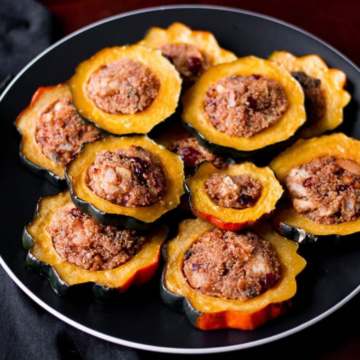
- Stuffed Acorn Squash
- Roasted Acorn Squash Soup
- Thai Kabocha Squash Curry
- Moroccan Butternut Squash Stew with Chickpeas
- Pumpkin Sage Baked Ziti
📖 Recipe
Equipment
Ingredients
- 1 large ambercup squash, about 2 ½ pounds, seeded and cut into 1-inch cubes (peeled or unpeeled)
- olive oil mister or cooking spray, or 1 tablespoon olive oil
- salt + pepper to taste
- 2 tbsp. unsalted butter
- 1 tbsp. chopped fresh sage
Instructions
- Preheat the oven to 400°F. Lightly coat a large rimmed baking sheet with the olive oil mister or cooking spray.
- Spread the squash cubes in a single layer on the baking sheet, spray them lightly with more olive oil, and season with salt and pepper. Roast for about 40 minutes, stirring halfway through, until the squash is fork-tender and browned at the edges.
- About 10 minutes before the squash is done, make the brown butter: melt the butter in a small light-colored skillet over medium heat, whisking often. Once melted, add the sage and keep whisking until the butter smells nutty and turns golden brown, 3 to 5 minutes. Remove from the heat right away so it doesn't burn.
- Transfer the hot squash to a large bowl, pour the brown butter and sage over it, and toss gently to coat. Taste, adjust the salt and pepper, and serve warm.

Anele @ Success Along the Weigh says
SOOOO making this!!!
Carol @ Always Thyme to Cook says
The squash looks so good, perfect for the cooler days of Autumn! Great roundup of recipes as well.
Kare @ Kitchen Treaty says
I have an ambercup squash (I know to call it that thanks to your guide!), and it's just been sitting on my kitchen counter looking cute with the other squashes while I decide what to do with it. This looks like a wonderful way to go.
I, too, love to buy ingredients first and research later. I think it's one of the reasons why playing in the kitchen is so dang fun! 🙂
Kiersten says
You can never go wrong with roasting a squash! 😀 Or pairing it with sage!
Tina @ More Please Recipes says
Thanks for the guide on squashes. Otherwise, I would have never known what an ambercup was!
Cassie says
This looks amazing. And what a roundup! I love fall food!
Jackie @ The Beeroness says
I love squash AND brown butter. So lovely of you to put them together for me!
Crista says
looks simple & ahhhhmazing!
Natalie says
So many great recipes! I just tried my first buttercup squash this week, it was delicious (but a lot of winter squashes taste the same to me!)
Kiersten says
They taste the same to me too! Well, some are a little sweeter than others and some have slightly different textures, but if I didn't know what I was eating in advance, there's no way I'd ever be able to tell the difference.
Courtney Rae Jones says
Oh dear, what a list! I don't know what to make first! I am intrigued by the cranberry chipotle ketchup!
Kiersten says
I am eagerly awaiting cranberry season so I can make that one again! 😀
natasha says
I love Acorn squash - well really squash of any variety! Thanks for the recipe!
Brenda Williams says
Never met a squash I didn't like...LOL Winter or summer squash is wonderful. I love mixing squash with diced canned tomatoes.
Kiersten says
That would definitely be a nice, easy side dish!
Jennifer The Quirky Momma says
I adore all squash! I'm trying to find a preparation that my family will enjoy as much as I do, so I'm giving yours a try!
Kiersten says
Have you tried making butternut squash fries? That's a good way to entice picky eaters to eat squash!
sarah@thesweetlife says
This is a great looking round-up! Several must-try dishes.
BTW, I really like how you wrap up your week with "What I Ate". Such a great way to try things around the blogosphere for yourself. I'm always seeing stuff I want to try, and then not making the space to do so.
Kiersten says
Yeah, it's hard sometimes when you're working on recipes for your own blog! But I like doing that instead of a traditional round-up post because it's fun to actually try what other bloggers and websites are posting. 🙂
Shirley says
I had to refer back to your handy guide -- I don't think I've ever seen an ambercup before. I just love roasted winter squashes, so I'm going to have to look for it. Heading to the farmers market today, even though it's raining, so maybe I'll see it there.
Kiersten says
I have seen some ca-raaazy squashes since moving down here. I never saw so many kinds in Wisconsin!