
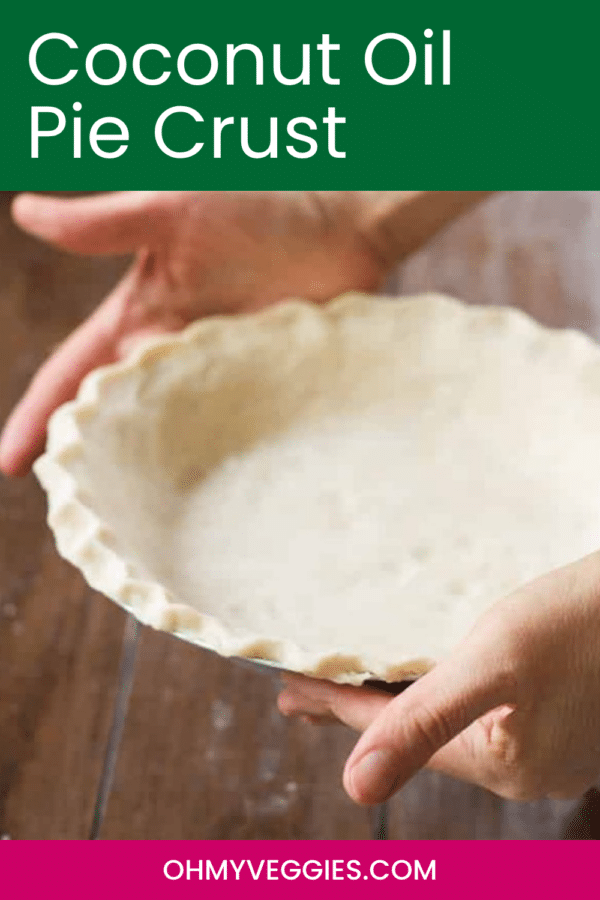
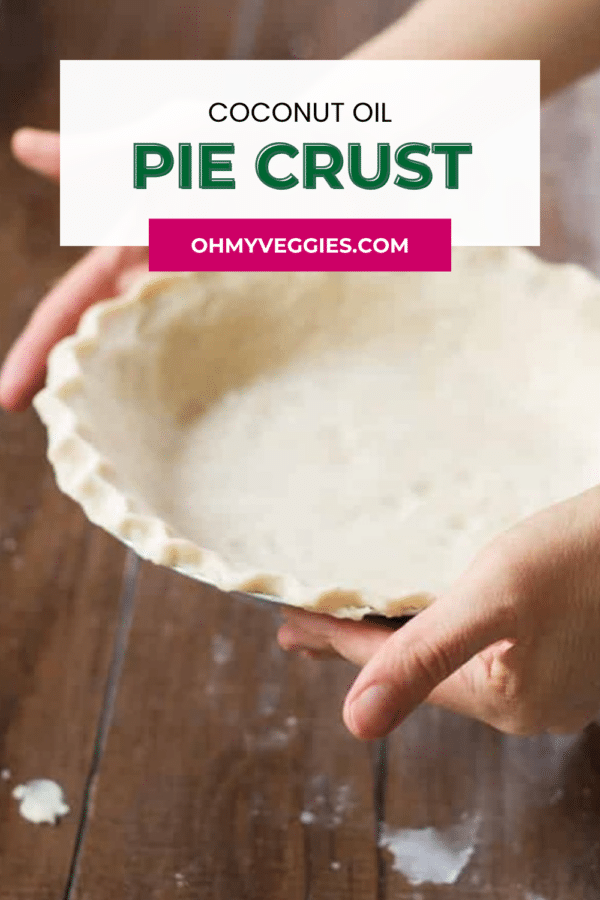
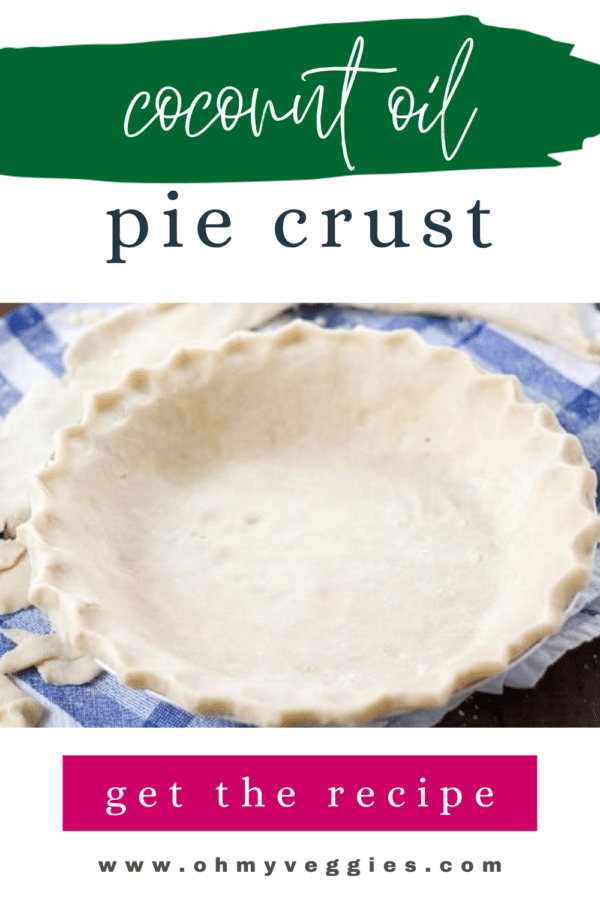
This homemade coconut oil pie crust is a tender, flaky, 100% vegan pie crust made with just four simple ingredients: flour, coconut oil, salt, and water. It rolls out easily, holds its shape, and works for both sweet and savory pies.
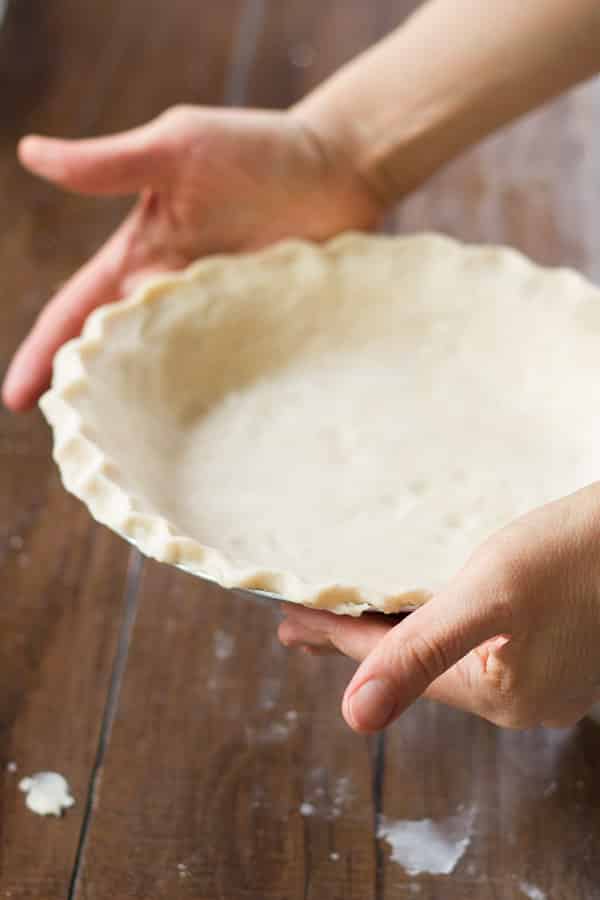
We love pie in my family, and pie pretty much always takes center stage on Thanksgiving. A few years ago though, I was bummed out when a family member made a delicious looking apple pie, only to find out that the crust had lard in it, so I couldn’t eat it.
Now, there are probably a few vegan premade pie crust options available at your supermarket, so that’s one solution, but I always like to have the option of creating my own vegan version of stuff like this. Also, isn’t homemade always way better? As it turns out, a homemade vegan pie crust is easier to make than you’d think.
There are a few options available as far as ingredients are concerned, but I decided to go with a coconut oil pie crust because (1) I always have coconut oil on hand, (2) I love the little bit of coconutty flavor it gives the crust, and (3) it’s actually pretty darn easy! So without further ado, here’s how to make your very own, 100% vegan pie crust, using coconut oil.
Coconut Oil Pie Crust Ingredients
You only need 4 ingredients to make vegan coconut oil pie crust, and you’ve probably got them all on hand: coconut oil, flour, salt and water.
You can use refined or unrefined coconut oil here. I generally keep the unrefined stuff around, because it’s what I prefer. Unrefined (unrefined coconut oil) will give your crust a bit of a coconutty flavor though, so if you don’t like the taste of coconut, or you’re making a crust for a savory pie, go with refined. Whichever variety you decide to use, make sure it’s in a solid state (not melted).
All-purpose flour is what most of us will have on hand, and it’s super easy to work with, so I’d go with that variety, at least for your first crust. Once you get a feel for DIY coconut oil pie crust making, you can try out whole wheat, spelt, or whatever variety of flour you fancy. You’ll just end up with some variation in texture.
The salt seasons the dough so the crust doesn’t taste flat, and the water is what brings everything together. Use ice-cold water, because warm water will soften the coconut oil before the crust ever gets to the oven. If you would rather use a different fat, my Easy Vegan Pie Crust uses dairy-free butter instead.
Make the Dough
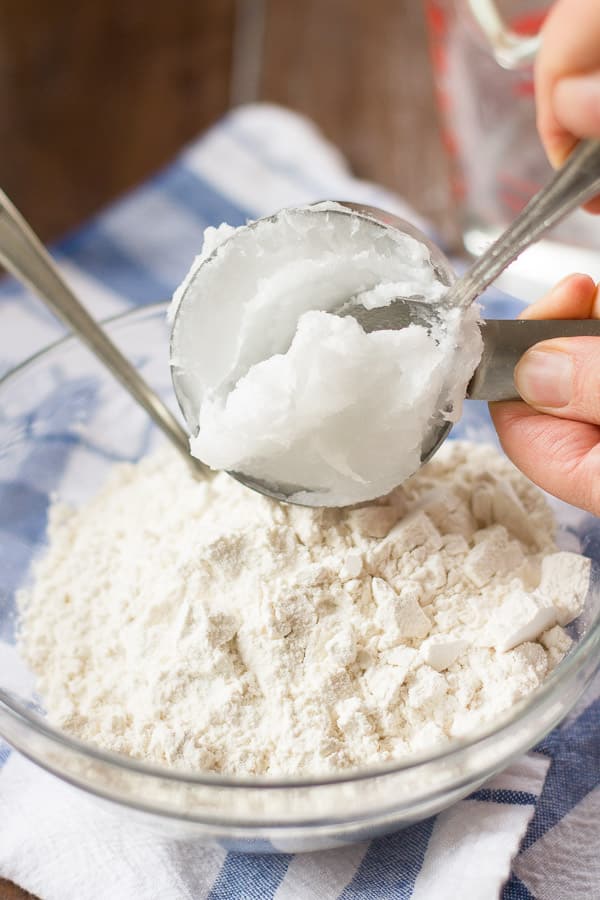
Place 1 ½ cups of flour into a mixing bowl and stir in ½ teaspoon of salt. Now, grab your jar of coconut oil, and remember that it should be solid; if your house is on the warm side it might be liquid, in which case you’ll need to chill it for a bit.
Measure out ½ cup of coconut oil and add it to your flour mixture. The next step is very similar to what you’d see in a regular old pie crust recipe: take a pastry cutter, a couple of knives or a fork, and cut the coconut oil into the flour mixture. Keep doing this until you get a fine, crumbly mixture. (Pro tip: use a bigger bowl than I did!)
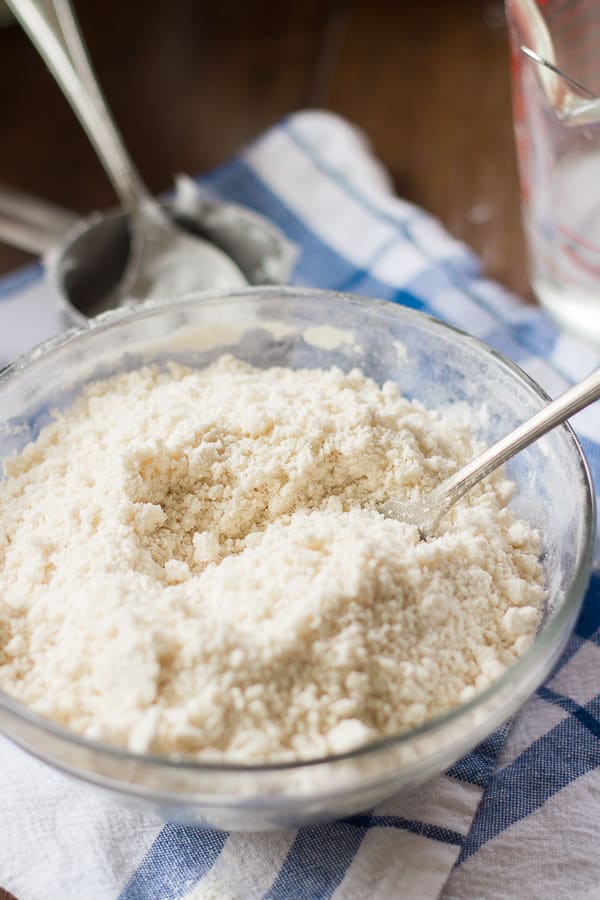
Next grab a glass of ice cold water. If your water isn’t super cold, add a few ice cubes to cool it down. Add a tablespoon of the cold water to the flour mixture and give it a stir with a fork or spoon. Now add another tablespoon of water. Keep adding and mixing. Once you’ve added about 3 to 4 tablespoons, you should start getting some large clumps. Ditch the utensil and start mixing it with your hands.
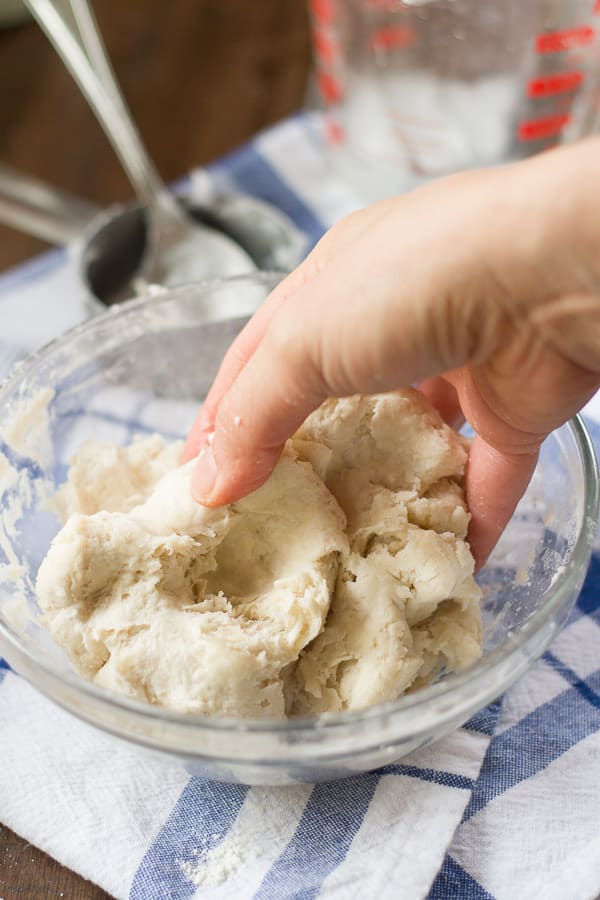
By the time you get to 7 or 8 tablespoons of water, you should have a nice dough going, so stop adding water at that point.
Roll Out and Shape the Coconut Oil Pie Crust
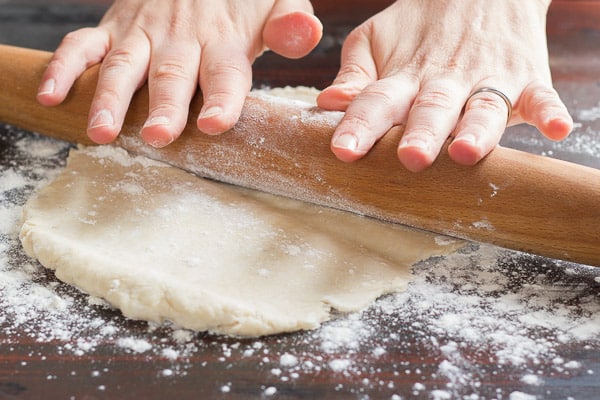
Shape your dough into a ball, then sprinkle a work surface and rolling pin with some flour. Roll the dough into a big circle, about 14 inches, or large enough to cover your pie plate and leave some overhang.
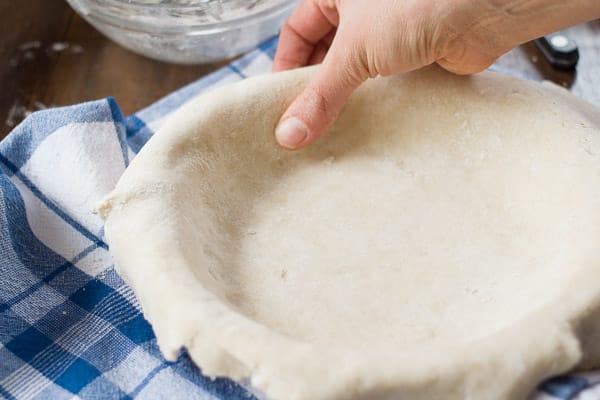
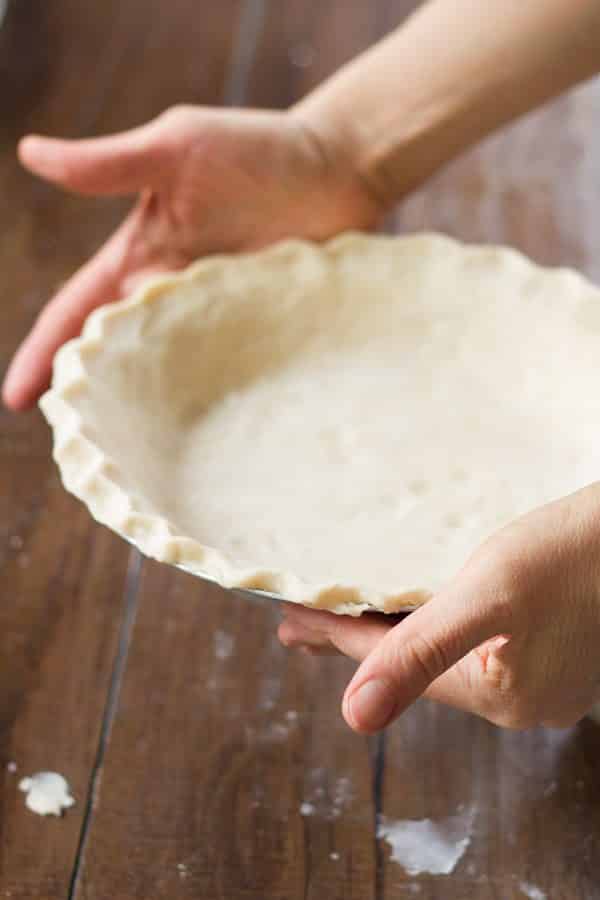
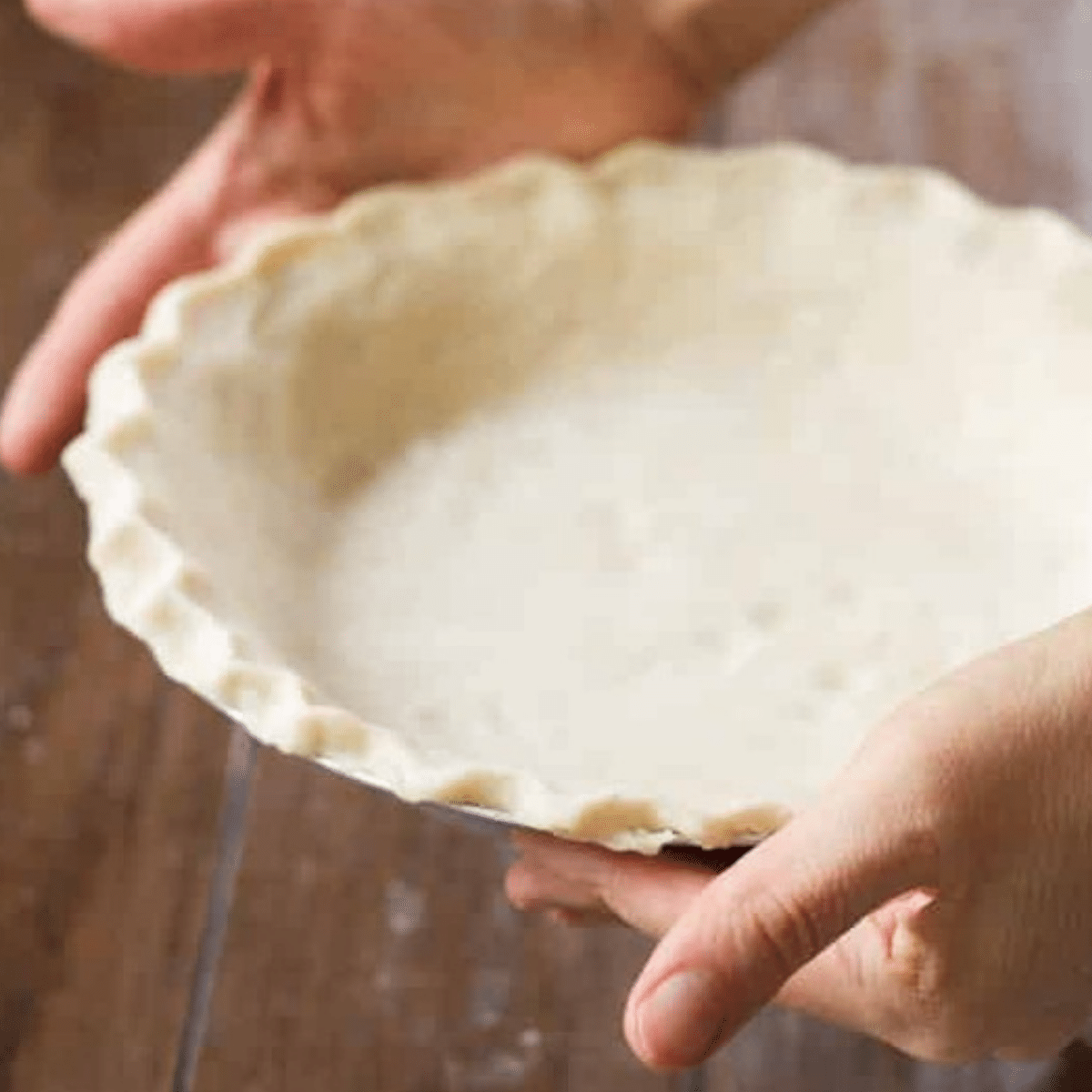
Now place the dough into the pie plate and gently press down, so it conforms to the shape of the plate. Use a knife or some kitchen shears to trim any excess dough from around the edges.
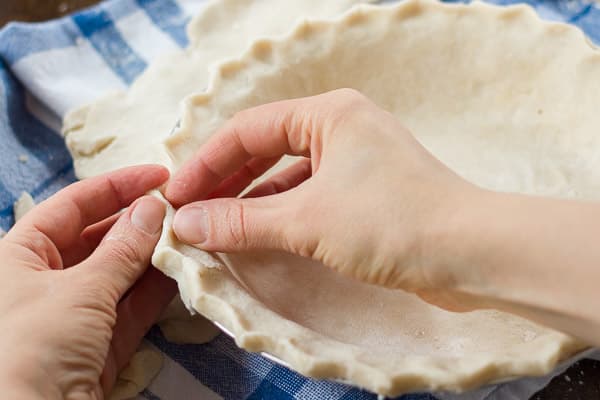
Use a fork or your fingers to create some scallops in the edges.
Make a Pie
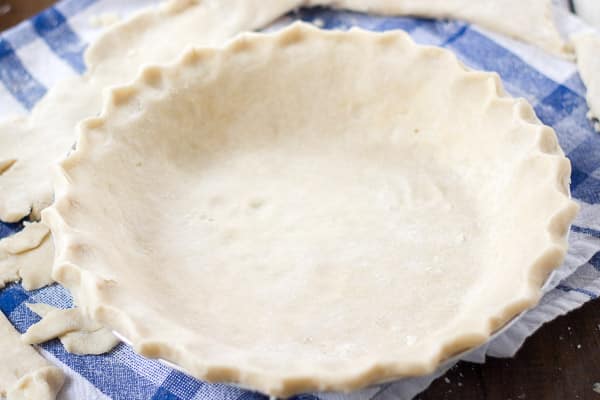
From there, you can use your coconut oil pie crust just like you would any other. If you’re making a baked pie (like pumpkin), fill it and bake according to the recipe.
If you’re making a no-bake pie, you’ll still need to bake the crust, just without the filling. Cover it with foil and place some pie weights or dried beans in the center. Bake it at 400°F until it’s nice and flaky, about 30 minutes. Transfer to a cooling rack, allow to cool, fill and serve.
Helpful Tips for Homemade Pie Crust
Keep the coconut oil solid, but not rock hard. Coconut oil melts at around 76°F, so it can turn to liquid on a warm day. If yours has softened, pop it in the fridge for 15 to 20 minutes before you start. Coconut oil straight from a cold fridge can be too hard to cut in, so let it sit on the counter for a few minutes if it feels like a brick.
Add the water slowly. Flour absorbs water differently depending on the brand and the humidity in your kitchen, so treat the water amounts as a guide. Add it a tablespoon at a time and stop as soon as the dough holds together when you squeeze a handful. A sticky dough is harder to roll and can turn out tough.
Work quickly and don’t overwork the dough. The heat from your hands will soften the coconut oil, so once the dough comes together, stop mixing. If it gets soft or greasy, wrap it in plastic wrap and chill it for 20 to 30 minutes before rolling.
Roll, rotate, and patch. Give the dough a quarter turn after every couple of passes with the rolling pin so it doesn’t stick, and add a light dusting of flour only as needed. If the dough cracks or tears, press a scrap of trimmed dough over the spot like a patch. A 9-inch glass pie plate works well because you can see how the bottom of the crust is browning.
Blind bake to prevent shrinking. For no-bake fillings, chill the shaped crust for 15 minutes before it goes into the oven, prick the bottom a few times with a fork, and use plenty of pie weights or dried beans so the sides don’t slump.
Coconut Oil Pie Crust Variations
- Whole wheat or spelt. Swap some or all of the all-purpose flour for whole wheat or spelt flour for a nuttier flavor and a slightly heartier texture. You may need a little more water.
- Savory herb crust. Use refined coconut oil and stir a teaspoon of dried thyme or rosemary and some black pepper into the flour for quiches and pot pies.
- Lightly sweet crust. Add a tablespoon or two of sugar and a pinch of cinnamon to the flour for fruit pies and dessert tarts.
- Double crust. Need a top crust too? Make a second batch of dough and roll it out the same way. It’s easiest to make two batches rather than doubling the amounts in one bowl.
- Mini pies and tarts. Roll the dough out, cut circles, and press them into a muffin tin. They bake faster than a full-size crust, so start checking them early.
Serving Ideas
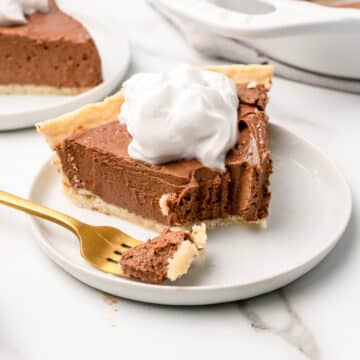
This crust is a great base for classic holiday desserts like vegan pumpkin pie, apple pie, or a chocolate cream pie. Because the coconut oil gives it a mild flavor, it also works nicely with cream fillings and fresh fruit. Top slices with coconut whipped cream or a scoop of dairy-free ice cream.
It isn’t just for dessert, either. Try it as the crust for savory bakes like our Easy Vegan Quiche, or roll it out as a top crust for a homemade pot pie. If you need some pie-baking inspiration, check out our collection of 15 Must-Make Vegan Pies.
Storing & Freezing
Wrap the unbaked dough in plastic wrap and refrigerate it for up to 2 days. Coconut oil is firm when cold, so let the dough sit at room temperature for 10 to 15 minutes before rolling so it doesn’t crack. A baked, unfilled crust can be covered and stored at room temperature for a day, or in the refrigerator for up to 3 days.
You can even freeze it for later if you’d like. Just place the shaped crust in a large freezer bag and seal it tight, or freeze a wrapped disk of dough for up to 2 to 3 months. Take it out of the freezer and give it about an hour to thaw before using.
More Vegan Pie Recipes
If you loved this recipe, here are a few more you might enjoy:
📖 Recipe
Ingredients
- 1 ½ cups all-purpose flour, plus more for rolling
- ½ teaspoon salt
- ½ cup coconut oil, solid, not melted; refined or unrefined
- 7 to 8 tablespoons ice-cold water, added 1 tablespoon at a time
Instructions
- Place the flour and salt in a large mixing bowl and stir to combine.
- Add the solid coconut oil (if your kitchen is warm and it has melted, chill it first until firm). Cut the coconut oil into the flour with a pastry cutter, two knives, or a fork until the mixture is fine and crumbly.
- Add the ice-cold water 1 tablespoon at a time, stirring with a fork after each addition. After about 3 to 4 tablespoons you should see large clumps. Switch to mixing with your hands and keep adding water until a nice dough forms, about 7 to 8 tablespoons in total. Stop adding water at that point.
- Shape the dough into a ball. Sprinkle a work surface and rolling pin with flour, then roll the dough into a large circle, about 14 inches across, big enough to cover your pie plate with some overhang.
- Place the dough in the pie plate and gently press it down so it conforms to the shape of the plate. Trim any excess dough from the edges with a knife or kitchen shears, then use a fork or your fingers to create scallops around the edge.
- For a baked pie (like pumpkin), fill the crust and bake according to your pie recipe.
- For a no-bake pie, blind bake the crust first: preheat the oven to 400 degrees F. Cover the crust with foil and fill the center with pie weights or dried beans. Bake until flaky, about 30 minutes. Transfer to a cooling rack, let cool completely, then fill and serve.
wen smith says
recpe left out saltamount.
Jackie Cooper says
(In the text - might have been added later?) Place 1 ½ cups of flour into a mixing bowl and stir in 1/2 teaspoon of salt.
Mary Clark says
How does this work for gluten free, will it work with brown rice flour?
Alissa says
I haven't tried a gluten-free version of this, but I think you could make it work with a 1 to 1 gluten-free blend. I'd love to hear how it works out if you give it a try!
Joanne says
Do you have nutritional info for this crust?
mick says
this pie crust was so easy to make