
Making vegetable broth is one of those things that's really easy to do, but I bet most of us don't do it. Or, at least, don't do it often.
I use vegetable broth in a lot of my recipes, but I'll be honest, I often use store-bought broth. But I shouldn't because making your own vegetable broth is so, so easy. And you know what else? It tastes so much better too.
Unlike meat-based broths, there's no skimming off fat or any of that ickiness. You don't need to keep the pot on the stove for hours either. But it does require a little bit of advance planning. It also requires these three things:
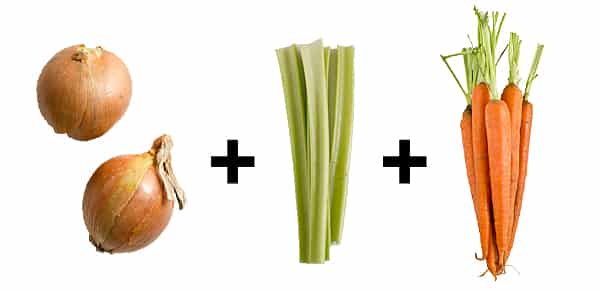
Onions (or a member of the onion family--leeks or shallots work too), celery, and carrots. That's your starting point, but from there, you can tailor your broth to what you're going to be using it for.
And of course a pot! A large stock pot like this one will work best, or a Dutch oven is a great choice as well.
Add sprigs of thyme and parsley to make a cooking liquid for rice and other grains. If you're going to be using the broth as a base for an Asian-inspired soup (like this Thai Red Curry Soup), try adding fresh ginger and lemongrass.
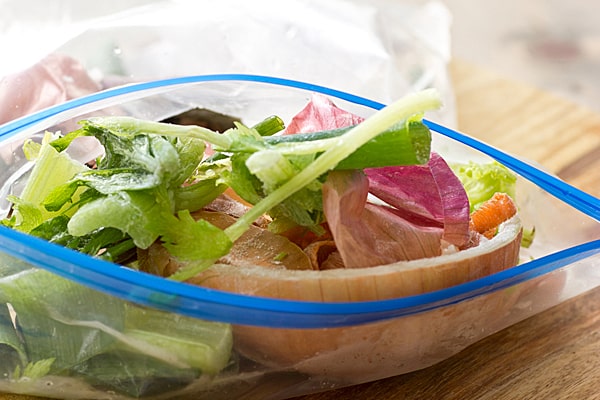
Now, back to that thing I said about advance planning! You can buy whatever you want for your broth, chop it all up, and put it in your stockpot. But I'm cheap and it kills my soul a little to think about throwing away all those perfectly good veggies.
It's bad enough I have to throw away the onions, celery, and carrots!
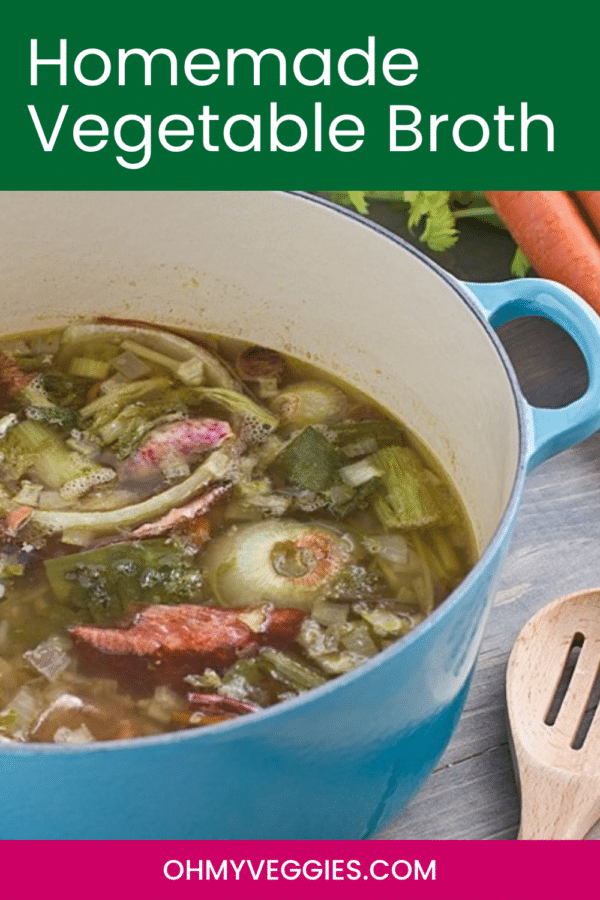
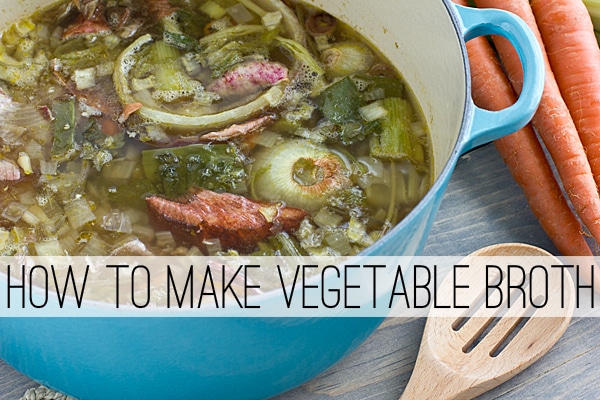
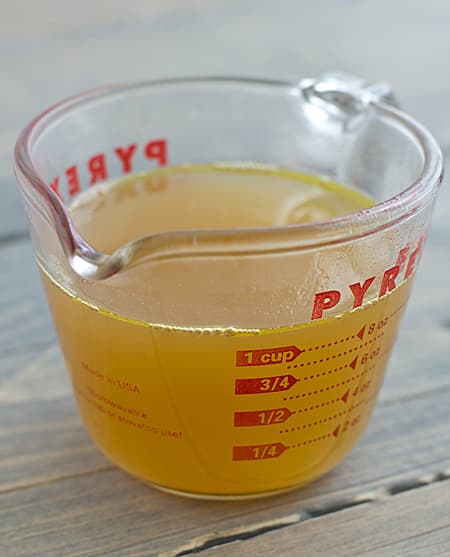
So instead of buying what I need, I collect scraps in a freezer bag and when I have a few cups worth, I use them to make broth. Here's what I used in this particular batch:
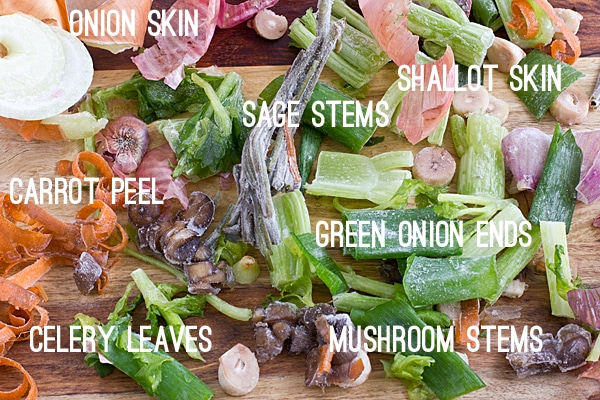
But really, you can use so many different things. You do want to stay away from cruciferous veggies--no cabbage, no broccoli, no cauliflower, and for the love of all things holy, no Brussels sprouts--because they can leave bitter flavors in your broth.
Make sure everything you use is clean too--you don't want to make dirt soup!
And remember, there's a difference between things you don't want to eat vs. things you shouldn't eat. Clean carrot peel is fine in a broth or stock; a moldy carrot is not.
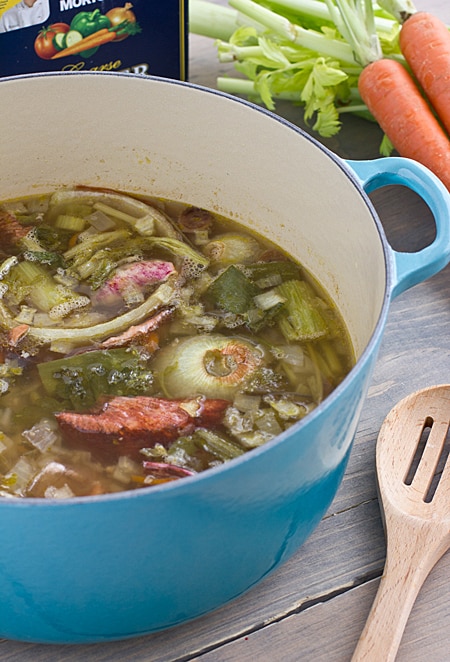
Oh, and speaking of stock! Have you ever wondered the difference between vegetable broth and stock? Broth is seasoned, while stock is not.
So this recipe can be used for both vegetable broth or stock. To make stock, skip adding salt and pepper at the end.
And if you want to make your own broth, but aren't keen on the idea of using your veggie scraps, go check out this vegetable stock recipe too.
Helpful Tips
Know which scraps to skip. Along with the cruciferous crew (cabbage, broccoli, cauliflower, kale stems, turnips, and yes, Brussels sprouts), leave out beet peels and red onion skins unless you want pink broth, and skip starchy potato peels, which make the broth cloudy and a little gummy. Anything slimy, moldy, or truly past its prime goes in the compost, not the pot.
Treat strong flavors as accents. Bell pepper cores, fennel fronds, lots of tomato ends, and woody herb stems like rosemary can take over a whole pot and even turn it a little bitter. A few are great, but onions, celery, and carrots should make up most of your scrap bag so the broth tastes like, well, vegetable broth.
Keep it at a gentle simmer. A hard boil breaks the vegetables down into mush and clouds the broth. Bring the pot up to a boil, then turn the heat down until just a few lazy bubbles break the surface and leave the lid slightly ajar.
Don't simmer it all day. Unlike bone broth, vegetable broth doesn't get better with hours of cooking. After about an hour, the vegetables have given up their flavor and start adding stewed, bitter notes instead, so 45 minutes to an hour is the sweet spot.
Strain it, don't squish it. Pour the broth through a fine-mesh strainer and let it drip on its own. Pressing hard on the solids pushes tiny bits through and muddies the broth. For extra-clear broth, line the strainer with a layer of cheesecloth.
Variations
- Mushroom umami broth. Add a big handful of mushroom stems, 3 or 4 dried shiitake mushrooms, and a strip of kombu if you have it. Finish with a splash of soy sauce or tamari for a deep, savory broth that's perfect for mushroom ramen.
- Roasted vegetable broth. Toss the onions, carrots, celery, and scraps with a little olive oil and roast at 425°F for 30 to 40 minutes, until browned in spots. Scrape everything (including the browned bits on the pan) into the pot with the water. The result is darker and richer, great for gravy and hearty stews.
- Italian-style broth. Stir in a tablespoon of tomato paste with the vegetables, then add basil stems and a pinch of red pepper flakes. Use it for minestrone or pasta e fagioli.
- Corn cob broth. In the summer, toss a few stripped corn cobs into the pot. They add a subtle sweetness that's lovely in corn chowder or potato soup.
- Bright spring broth. Use leek greens, parsley stems, a few sprigs of dill, and a strip of lemon peel for a lighter broth that works well in brothy spring soups and risotto.
Ways to Use It
Soup is the obvious place to start. Use homemade broth in any recipe that calls for vegetable broth or stock, from a quick noodle soup to a cozy Moroccan butternut squash stew. It's also the best thing you can do for a pot of grains: cook rice, quinoa, farro, or couscous in broth instead of water and they'll taste seasoned all the way through. And in a dish like vegan butternut squash risotto, where the broth is doing most of the flavor work, homemade really shines.
Beyond that, keep a jar handy for everyday cooking. Use a splash to deglaze a pan after sautéing vegetables, thin out a sauce that's gotten too thick, braise greens or beans, or make a quick vegetarian gravy. You can even mash potatoes with a little warm broth instead of milk. And on a chilly day (or a sick day), a mug of hot broth with a pinch of salt and a squeeze of lemon is surprisingly comforting.
Storing & Freezing
Let the broth cool, then transfer it to airtight containers or glass jars and refrigerate for up to 4 to 5 days. To cool a big batch faster (and keep it out of the food safety danger zone), divide it into smaller containers rather than putting the whole hot pot in the fridge.
Vegetable broth freezes beautifully for up to 6 months. Freeze it in 1- or 2-cup portions so you only thaw what you need: freezer bags laid flat save space, and silicone freezer molds make neat, stackable blocks. If you use glass jars, leave at least an inch of headspace so they don't crack as the broth expands. Thaw overnight in the fridge, or just drop the frozen broth straight into a saucepan and warm it over low heat. Your bag of frozen scraps keeps for about 3 months, so start a new one as soon as you've made a batch!
More Vegetarian Soups
Now that you've got a pot of homemade broth, here are a few soups to put it to work:
- Tuscan Kale Soup
- Vegan Lentil Soup With Butter Beans
- Easy Vegan Split Pea Soup
- Tomato Florentine Soup
📖 Recipe
Equipment
Ingredients
- 1 tablespoon olive oil
- 5 cloves garlic, minced
- 2 onions, large, chopped
- 3 ribs celery, chopped
- 3 carrots, chopped
- 8 cups water
- frozen vegetable scraps, 2-3 cups is a good amount
- 2 bay leaves
- parsley, a few sprigs
- thyme, a few sprigs
- salt and pepper, to taste, omit if you are making stock
Instructions
- Heat the olive oil in a large Dutch oven or stockpot over medium heat.
- Add the garlic, onions, celery, and carrots. Cook until softened, about 5 minutes, stirring often.
- Add the water, frozen vegetable scraps, bay leaves, parsley, and thyme. Bring to a boil over high heat, then reduce heat to low and simmer, partially covered, for 45 minutes.
- Pour the broth through a fine mesh strainer into a large heat-proof bowl or pot; discard solids. Season with salt and pepper to taste (skip this if you're making stock).
- Once the broth has cooled, transfer it to airtight plastic containers or freezer bags and store it in the freezer. (I usually freeze it in 2-cup portions so I don't have to thaw all the broth every time I use it.)
Notes
Nutrition (estimated per serving)
This post was originally published on January 8, 2013.


Ana says
Great idea! Just one question: How long can you leave the left over veggies in the freezer? Will they not spoil?
Thank you
Kiersten says
Since they're frozen, you can leave them in the freezer for quite a while. You're discarding them after you make the broth anyway, so you don't have to worry about the texture being off or anything like that. I've kept my scraps in the fridge for about 3 months.
TalleySueNYC says
Why no broccoli or cauliflower?
(I used the trimmings from green beans!)
Kiersten says
Some people have reported that they use them without having any issues, but any cruciferous veggies have the potential to add bitterness to the broth.
Nancy Mcbride says
I am curious as to why there is no mention of potatoes peelings for veggie stock or broths?
I have always thought they added a thickness to the stock/broth.
Looking forward to hearing from you,I am eager to start my stock.
Kiersten says
You can use almost any veggie scraps to make broth--in the picture, I just photographed what I used for this particular batch. I usually don't have potato peelings to add because I rarely peel my potatoes!
Wes says
How long can I keep the vege broth in a fridge?
Kiersten says
I wouldn't keep it in the fridge for more than 2-3 days. If you need it to last longer than that, I'd just freeze it. In general, I prefer freezing my broth to refrigerating it.
NJ says
Thank you for pointing out that you can keep the scraps in the freezer! What I have been doing up to now is keeping a container with the water left from steaming or simmering veggies, adding to it each time. When I get a few quarts, I use them for the base of bean-or-other soups. Adding the veggie bits will make it so much more tasty (strained BEFORE adding the beans, off course!
NBMaggie says
Since selling my little cottage with its garden and compost heap and moving into an apt. that does not recycle compostables, I've set aside my veg scraps and made my own stock as a way to compensate. IMO it's a matter of balance whether or not you add cabbage or other cruciferous veg. Too much upsets the ratio but a few leftover bits does no harm. Corn cobs also make a great addition...so do sweet potato peels.....
Kiersten says
I make stock with corn cobs and herbs during the summer. It makes a great base for corn chowder!
Vera says
I save EVERY bit of remnants from veggies that I cup up - EVERYTHING! I just keeping adding the remnants to freezer bags and once I have 2-3 full bags, it is time to make stock! NEVER waste ANYTHING - it will always come to good use.
amy lynne says
Thank you so much for the great ideas. A friend of mine told me this could be done but I didn't have the instructions so my one attempt wasn't great.
Katherine says
So excited to try this idea! I'm always looking for ways to waste less.
I'm a little confused, though, when you said to saute the onions, carrots etc before putting the water and frozen scraps in--did you buy new onions, carrots etc for that part or did you saute the scraps you had from those particular vegetables? Thanks!
Kiersten Frase says
You need whole carrots and onions to make the broth, not just scraps. I've heard some people just boil the scraps, but I think the flavor is better if you sauté the carrots, onions, and celery first.
Margaret Kelly says
Thank you so much for this! Now I have an excellent use for all the vegetable scraps that I would have just thrown away.
Kiersten Frase says
You're welcome! This is how I make all of my veggie stock & broth--it's much cheaper than buying it! 🙂
Kris says
can butternut squash's peel be used?
Kiersten Frase says
I've never tried it myself, but as long as they're clean, it should be fine.
Deb Schwartz says
Why do you throw away the onions, carrots, celery, and any other non-scrap veggies used to make the stock when they can be "recycled" back into the soup you make from the stock?
Kiersten Frase says
It would be difficult to separate them from the scraps (although putting the scraps in a cheesecloth would help) and I usually make big batches of broth to freeze them rather than making soup with them right away, but you can definitely do that if you like!
Wendy says
Love this and the mushroom stock too. Now that I'm a mom, I find that I really want to make everything on my own rather than trust what's packaged and in cans. Thanks!
Kiersten Frase says
Yes, a lot of store-bought broths and stocks are full of funky ingredients! It's too easy not to make it at home. 🙂
hande says
Thank you for the recipe. I have a question which may sound strange:
I prepared the broth a few days ago and because I wasnt going to use it right away, I put it in the freezer.
Just a moment ago, I saw that the broth in the ice cube thing has changed its colour to purple! Is this something normal? Or did I do something wrong and ruined the broth?
Btw, I used onions, carrots, leeks, parsley stems, celery, black pepper and some coriander seeds
Kiersten Frase says
I'm not sure what happened! Sometimes exposure to air in the freezer will make foods darken a little bit, so if the broth wasn't tightly covered, that could be why it changed color.
Laura says
It could be the onion. Sometimes that happens. Here's an article I found.
http://extension.psu.edu/food/preservation/news/2012/garlic-turns-blue
Ervin says
Did you first strain the broth and then froze the liquid or did you freeze it with the vegetable chunks still in it? If you did not strain it first I can see the color changes happening, otherwise the only color change should be a slight separation of clear water from the yellow stock this is normal.
Terry says
I usually have spring mix salad greens and spinach that are about to go bad. I usually juice these but can I use them in my broth? Also, could kale stems be used as well?
Thanks
Kiersten Frase says
I haven't tried using greens in broth myself, so I'm not sure how it would work out. Since kale is cruciferous, the stems may impart a bitter flavor, so I'd leave them out.
tania says
Have you ever use Peppercorn in this recipe?
Kiersten Frase says
Yes, you can definitely throw in some peppercorns!
Mirry says
I purchased some bags of frozen stir fry veg but it is not good in a stir fry as it goes very limp and soggy, I guess because it was frozen. instead of wasting these, can I use these to make the stock?
Kiersten Frase says
I've never done that before, but I don't see why it wouldn't work. I'd be sure to add some onions and garlic too if they're not already in the mix.
Ellen T. says
I just finished making this and it smells SO good. Its a very hot day outside (91 in the shade at 11am), but I wanted to clean out my freezer so I've got the BIG pot out on the side burner of my barbecue, so no heating up my house! I'm about to strain the broth into jars for the freezer, put the limp veggie remnants on my compost pile, and then start a fresh freezer bag for veggie ends to be ready to start it all again!
Kiersten Frase says
I love the way the kitchen smells after making a pot of vegetable stock! 🙂 I hope you enjoy it!
Lisa says
Have you ever added the green leaves from the top of carrots to stock? I make chicken stock by simmering bones for 24 hours, and would like to add in the carrot tops.
Kiersten Frase says
I've never done it myself, but I can't see why it wouldn't work...
Hoyt says
Thank you for the great tips on getting use out of veggie scraps. I happened to read the mushroom stock and veg stock recipes consecutively. I noticed the cooking times and approach are a little different and am wondering why. The mushroom stock recipe says simmer 45 mins partially covered then 30 more mins uncovered while the veg stock recipe does not include the final 30 mins. I know the additional time will thicken the stock, but why do it for the mushroom stock and not the veggie stock?
Kiersten Frase says
You can simmer the vegetable stock longer if you like. 🙂 I simmer the mushroom stock for an extra 30 minutes to concentrate the flavor; I don't think it's as necessary for vegetable broth.
Bill says
It is raining and chilly out today, I have been saving vegie scraps and will be trying this out today, stay tuned. I plan on using the broth in a lentil soup.
Janely says
Has anyone canned this recipe? I'd love to and not take up more freezer space, but haven't been able to find a simple canning recipe from ball or kerr, so wondering if anyone has any experience with canning veggie broth and the specs for the pressure canner.
Thanks in advance. 🙂
June Burns says
Awesome tutorial! I will have to try this sometime, to make my own soup 🙂
kathleen says
i use my pulp from my juicer to any vegges i have left over , no waste !
faith says
brilliant idea! such a shame to waste that veggie fiber
Jennifer @ Delicious Everyday says
I LOVE THIS! I hate the idea of throwing out leftovers so this is perfect! Thanks for sharing 🙂